Unlocking Creative Potential with 32 Clean Cardboard Parts for Digital and Print Design
In the evolving landscape of digital design and physical printing, texture plays a pivotal role in establishing depth, authenticity, and emotional connection. While vector graphics and flat design have dominated recent trends, there is a resurging demand for organic, tactile elements that ground a project in reality. This is where a specialized collection like 32 Clean Cardboard Parts becomes an invaluable asset for creators across various industries. This comprehensive set offers more than just background images; it provides a versatile toolkit of high-resolution assets designed to bridge the gap between the digital screen and the physical world.
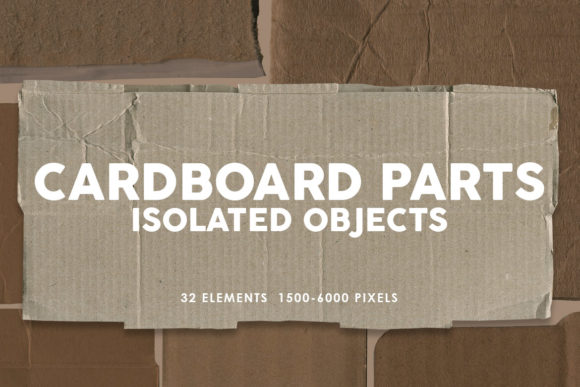
The collection consists of 32 distinct PNG files, each meticulously crafted to offer unique textural qualities without the noise or imperfections that often plague stock photography. With resolutions ranging from 1500 to 6000 pixels and a crisp 300 DPI in RGB color mode, these parts are engineered for versatility. Whether you are designing a massive outdoor banner or a delicate wedding invitation, the scalability and clarity of these files ensure professional results. The "clean" aspect of these parts is particularly significant; they provide the warm, fibrous aesthetic of cardboard without the distracting stains, tears, or uneven lighting found in raw photographs, allowing designers to maintain full control over their composition.
The Technical Advantage of High-Resolution Textures
Understanding the technical specifications of design assets is crucial for professionals who require reliability in their workflow. The 32 Clean Cardboard Parts are delivered in PNG format, which supports transparency. This feature is fundamental for layering, allowing designers to place cardboard textures over solid colors, gradients, or other images without harsh rectangular borders. The resolution range of 1500 to 6000 pixels ensures that every part can be scaled down for mobile interfaces or used at full size for large-format printing without losing fidelity.
At 300 DPI (dots per inch), these files meet the industry standard for high-quality print production. Many digital-only assets struggle when moved to print media because they lack the necessary pixel density, resulting in blurry or pixelated outputs. However, this collection is optimized for both realms. The RGB color mode ensures vibrant display on screens for web wallpapers, desktop backgrounds, and social media covers, while the high resolution allows for seamless conversion to CMYK for professional printing processes. This dual-purpose capability makes the set a cost-effective solution for agencies and freelancers who manage projects across multiple mediums.
Applications in Digital Branding and Social Media
In the crowded space of social media, standing out requires visual distinctiveness. Standard corporate templates often feel sterile and impersonal. Integrating cardboard textures can instantly inject a sense of eco-consciousness, craftsmanship, or vintage charm into a brand's visual identity. For instance, using these parts as Facebook covers or Twitter backgrounds can soften a profile's appearance, making it feel more approachable and human-centric.
For content creators on platforms like YouTube, channel art serves as the first impression for potential subscribers. A backdrop utilizing one of the 32 clean parts can frame channel logos and video thumbnails with a cohesive, textured border that suggests quality and attention to detail. Similarly, app developers can use these textures to create skeuomorphic elements within user interfaces, providing buttons or cards that feel tangible and interactive. The neutral tone of clean cardboard acts as a perfect canvas, ensuring that text and call-to-action buttons remain legible while adding subtle visual interest.
Presentations also benefit significantly from these assets. Whether for a corporate pitch or an educational lecture, sliding away from stark white backgrounds to a textured cardboard theme can help retain audience attention. It adds a layer of sophistication and can be thematically tied to topics regarding sustainability, logistics, packaging, or artisanal products. The variety within the 32-file set ensures that no two slides need to look identical, preventing visual monotony throughout a long deck.
Transforming Print Projects with Organic Textures
While digital applications are vast, the true strength of high-DPI assets shines in print media. The tactile nature of cardboard is inherently linked to physical products, making these textures ideal for flyers, posters, and greeting cards. When a recipient holds a flyer printed with a realistic cardboard texture, even if printed on smooth paper, the visual cue triggers a sensory association with durability and earthiness.
Event invitations, particularly for weddings, baby showers, or rustic-themed parties, often seek to convey warmth and intimacy. Using a clean cardboard part as the base layer for an invitation design eliminates the need for expensive textured paper stocks in some cases, or complements them beautifully when used as a digital proof. Designers can overlay elegant typography and floral clipart onto these textures to create a collage effect that feels handmade yet polished.
Furthermore, these parts serve as excellent resources for creating print templates and mockups. Packaging designers frequently need to visualize how a logo or label will appear on a corrugated box. Instead of photographing a physical box for every iteration, a designer can apply their artwork to one of the 32 clean cardboard parts in Photoshop or similar software. This accelerates the prototyping phase and allows clients to approve designs with a realistic preview of the final product. The "clean" nature of the texture ensures that the focus remains on the branding elements rather than dirt or damage on the box surface.
Educational and Collaborative Uses
Beyond commercial design, these assets hold significant value for educators and researchers. In educational materials, textures help break up walls of text and make learning resources more engaging for students of all ages. Teachers creating worksheets, certificates, or classroom decorations can use these parts to add a playful, crafty element that resonates with younger audiences. For researchers presenting data on supply chains or material science, having accurate, high-quality representations of cardboard materials enhances the credibility and visual appeal of their reports.
Hobbyists and DIY enthusiasts also find immense utility in such collections. Those involved in scrapbooking, whether digital or physical, rely on diverse textures to create depth in their layouts. The 32 different variations provide enough diversity to keep projects fresh, allowing users to mix and match grains and tones. Additionally, creators making zines, independent comics, or fan art can utilize these backgrounds to give their work a gritty, underground aesthetic that aligns with punk or indie cultures.
Strategic Considerations for Implementation
To maximize the effectiveness of the 32 Clean Cardboard Parts, designers should consider the context in which they are applied. While the texture is versatile, it is not a one-size-fits-all solution for every brand. Luxury brands aiming for a sleek, metallic, or ultra-modern look might find cardboard too rustic unless used ironically or in very specific accent areas. However, for brands focusing on sustainability, organic products, artisanal goods, or community initiatives, this texture is practically synonymous with their values.
Lighting and contrast are critical when overlaying text on textured backgrounds. Even though these parts are "clean," they still possess shadows and highlights inherent to the material structure. Designers must ensure sufficient contrast between the text color and the underlying texture to maintain accessibility and readability. Utilizing drop shadows, semi-transparent overlays, or bold typefaces can help text pop against the fibrous background. The PNG format facilitates this by allowing the texture to be placed strictly where needed, leaving other areas of the design clear.
Another strategic advantage is the ability to create a cohesive visual language across disparate platforms. By selecting two or three favorite parts from the set of 32, a business can establish a consistent texture motif. One part might serve as the website wallpaper, another as the header for email newsletters, and a third as the background for printed business cards. This repetition creates a subconscious brand recognition, tying the digital and physical experiences together seamlessly.
The Role of Texture in Modern Design Trends
Current design trends are increasingly moving towards "neo-brutalism" and "raw aesthetics," where imperfections and natural materials are celebrated over polished perfection. The 32 Clean Cardboard Parts fit perfectly into this paradigm. They offer the raw look of industrial materials but with the cleanliness required for commercial viability. This balance allows designers to ride the wave of trending aesthetics without compromising the professional quality expected by clients.
Moreover, as consumers become more environmentally aware, visual cues that suggest recyclability and natural origins are becoming powerful marketing tools. Using cardboard textures subtly signals to the viewer that a brand is grounded, practical, and potentially eco-friendly. It is a non-verbal communication strategy that can enhance brand perception without explicitly stating it in the copy.
In conclusion, the utility of a high-quality texture pack extends far beyond simple decoration. It is a foundational element that influences mood, usability, and brand identity. With 32 unique options ranging from fine grains to broader weaves, this collection provides the flexibility needed for diverse creative challenges. From the small screen of an iPhone to the large format of a trade show banner, these assets empower creators to produce work that feels tangible, authentic, and deeply engaging. By integrating these clean cardboard parts into your workflow, you unlock a new dimension of design possibilities that resonate with audiences on both a visual and psychological level.