Enhancing Digital Interfaces with the Apiary Icons Set Outline Style
In the rapidly evolving landscape of web and mobile user interface design, the choice of visual assets can significantly influence user engagement and brand perception. Among the myriad of resources available to designers, the Apiary Icons Set in Outline Style has emerged as a versatile and essential toolkit. This collection of basic apiary elements serves not only beekeepers and agricultural researchers but also provides a unique aesthetic for applications related to nature, sustainability, food production, and education. By leveraging vector illustrations available in formats such as JPG, EPS, AI, PSD, and PNG, creators can ensure scalability and clarity across all digital platforms.
The Strategic Value of Outline Aesthetics in Modern UI
The shift towards minimalism in user interface design has elevated the status of outline icons. Unlike their filled counterparts, outline style icons offer a lighter visual weight, reducing cognitive load for the user while maintaining clear communicative intent. The Apiary Icons Set, Outline Style exemplifies this principle by presenting complex biological and mechanical concepts through clean, uncluttered lines. This approach is particularly effective in mobile UI, where screen real estate is at a premium. Thin, precise strokes allow these icons to sit comfortably alongside text and other interactive elements without creating a cluttered appearance.
Furthermore, outline icons possess a inherent adaptability. They can be easily styled via CSS or design software to match specific brand colors, stroke widths, and hover states. When utilizing the Outline apiary icons set, developers can manipulate the vector paths to create dynamic interactions, such as filling the icon upon selection or animating the stroke dash-array for loading sequences. This flexibility makes the set invaluable for professionals seeking a cohesive design language that remains consistent across web and mobile environments.
Comprehensive Breakdown of Apiary Elements
A robust icon set must cover the full spectrum of its subject matter to be truly useful. The universal apiary icons included in this collection address the entire lifecycle and ecosystem of beekeeping. Understanding the specific elements available allows designers to construct comprehensive narratives within their applications.
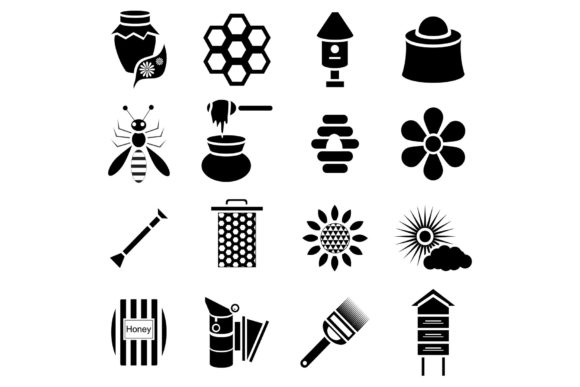
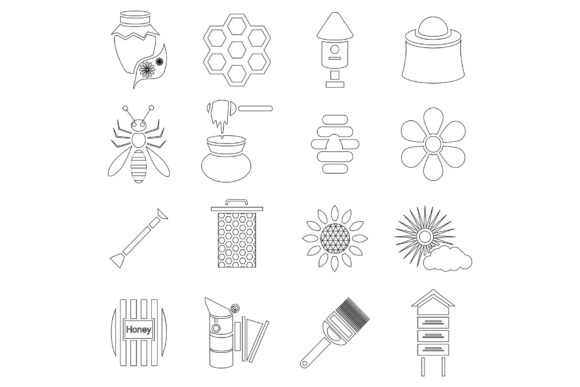
- Hive Structures: Detailed representations of Langstroth hives, top-bar hives, and skeps provide the foundational imagery for management apps. These outlines clearly distinguish between different hive types, aiding in educational contexts.
- Tools of the Trade: Essential equipment such as smokers, hive tools, bee brushes, and protective suits are rendered with precision. These icons are critical for e-commerce platforms selling beekeeping supplies or instructional guides.
- Biological Components: Beyond the hardware, the set includes various stages of the bee life cycle, from eggs and larvae to capped brood. Distinct icons for queens, workers, and drones help visualize colony health data.
- Harvest and Products: Icons depicting honey jars, honeycombs, wax candles, and propolis tubes connect the agricultural process to the consumer end-product, ideal for marketing materials.
- Flora and Environment: To complete the ecosystem, the set often includes outline illustrations of flowers, pollen sources, and environmental indicators, emphasizing the connection between bees and biodiversity.
Technical Versatility Across File Formats
The utility of any design asset is heavily dependent on its file format availability. The Apiary Icons Set distinguishes itself by offering a wide array of formats, ensuring compatibility with virtually any workflow. For vector-based editing, the inclusion of AI (Adobe Illustrator) and EPS files is paramount. These formats allow graphic designers to scale the icons to any size without loss of quality, a necessity for responsive web design where an icon might appear as a small favicon on a smartphone and a large hero graphic on a desktop monitor.
For raster-based workflows, the provision of high-resolution PNG files with transparent backgrounds ensures immediate usability in web development and presentation software. The PSD (Photoshop) files offer layered structures, giving designers the ability to tweak shadows, textures, or specific line weights before export. Even the JPG format serves a purpose for quick previews or non-transparent background requirements in certain documentation contexts. This multi-format approach eliminates the friction often encountered when trying to integrate specialized illustrations into diverse tech stacks.
Applications in Educational and Research Platforms
One of the most impactful use cases for the Outline apiary icons set is in the realm of education and scientific research. Educators developing interactive modules about pollination, colony collapse disorder, or sustainable agriculture require visuals that are accurate yet approachable. The clean lines of the outline style prevent the imagery from becoming too realistic or distracting, allowing students to focus on the structural relationships between different apiary elements.
Researchers and data analysts can utilize these icons to annotate charts and graphs. For instance, a dashboard tracking hive weight over time can use a specific hive icon to mark inspection dates, while a honeycomb icon could indicate harvest events. The semantic clarity of the Apiary Icons Set, Outline Style ensures that data visualization remains intuitive. In mobile apps designed for citizen science projects, where users report bee sightings or hive health, these universal icons provide a common visual language that transcends linguistic barriers.
Integration Strategies for Web and Mobile Development
Implementing these icons into a live environment requires careful consideration of performance and accessibility. When using the vector formats like SVG (often derived from AI or EPS), developers can inline the code directly into the HTML. This method reduces HTTP requests and improves page load speeds, a critical factor for SEO and user retention. The simplicity of the outline style means the resulting code is lightweight, further enhancing performance.
For mobile application development, particularly in native iOS or Android environments, the scalable nature of the vector assets ensures crisp rendering on high-DPI screens. Designers can import the AI or EPS files directly into design tools like Figma or Sketch to generate the necessary asset catalogs. It is crucial, however, to maintain adequate contrast ratios. Since outline icons rely on strokes rather than filled areas, ensuring the stroke width is sufficient against the background color is vital for accessibility compliance, especially for users with visual impairments.
Brand Alignment and Customization Potential
While the Apiary Icons Set provides a standardized look, its true power lies in its customizability. Brands focusing on organic products, eco-friendly initiatives, or artisanal foods can adapt the color palette of these outline icons to match their specific brand guidelines. The open paths of the outline style make it easy to apply gradients or duotone effects, adding a modern touch to traditional subjects.
Moreover, the consistency of the line weight across the entire set ensures a professional finish. When mixing these apiary elements with other icon sets, designers must pay attention to stroke uniformity. The Outline apiary icons set is typically designed with a standard grid system, making it relatively easy to pair with other universal outline icons for broader interface needs, such as navigation arrows, user profiles, or settings gears. This coherence helps in building a unified user experience where every visual element feels part of a single, thoughtfully curated system.
Future-Proofing Design Assets
As digital trends continue to shift towards more immersive and interactive experiences, the demand for high-quality, scalable vector art remains constant. The Apiary Icons Set, Outline Style represents an investment in future-proof design. Unlike pixel-based images that may become obsolete as screen resolutions increase, vector illustrations remain sharp indefinitely. This longevity is particularly important for long-term projects such as educational curriculums, corporate branding, or extensive software suites.
Additionally, the thematic relevance of apiary elements is growing. With increasing global awareness regarding the importance of pollinators and environmental stewardship, interfaces that incorporate these themes resonate deeply with modern audiences. Whether used in a sophisticated data analytics platform for commercial beekeepers or a simple blog about urban gardening, these icons bridge the gap between technical functionality and emotional connection to nature.
Optimizing Workflow with Layered Assets
For creative professionals, time is a valuable resource. The availability of layered PSD and AI files within the Apiary Icons Set streamlines the customization process. Designers do not need to redraw elements or trace bitmaps; instead, they can isolate specific components—such as removing the smoke from a smoker icon or changing the pattern on a honeycomb—to suit specific contextual needs. This level of control fosters creativity and allows for the creation of unique variations without starting from scratch.
When preparing assets for development handoff, organizing these layers logically ensures that developers can extract exactly what they need. Clear naming conventions in the source files, combined with the structured nature of the outline designs, facilitate a smoother transition from design to code. This efficiency reduces the likelihood of errors and ensures that the final product accurately reflects the designer's vision.
In conclusion, the integration of the Apiary Icons Set, Outline Style into web and mobile projects offers a blend of aesthetic elegance and functional utility. By providing a comprehensive range of basic apiary elements in versatile formats like JPG, EPS, AI, PSD, and PNG, this collection empowers a broad audience—from hobbyists to enterprise developers—to create engaging, informative, and visually cohesive digital experiences. As the intersection of technology and nature continues to expand, such specialized yet adaptable visual resources will remain indispensable tools in the designer's arsenal.